WaterSaver
1,000 people9M L
Estimated yearly impact from closing the tap during repeated brushing sessions.
Money
$35,040
Bathtubs
58K
CO2 kg
2,449
Live impact counter
Scale a small tap-off habit from one person to a family, classroom, city, or beyond.
Potential yearly savings
Live scenario preview
9M L
$35,040
Scenario
Choose a person, household, class, city, or custom group size.
How often each person can save water by closing the tap.
Use 7.5 L/min as a practical bathroom faucet estimate.
The running-tap time avoided during each brushing session.
Show impact over a month, a year, or a custom period.
Live counters
Yearly liters
9M L
Daily savings
24K L / day
Money saved
$35,040
Bathtubs
58K
Drinking water
4M days
CO2 impact
2,449.3 kg
Milestone
1%
9M L
Water motion
Potential saved
9M L
Comparisons
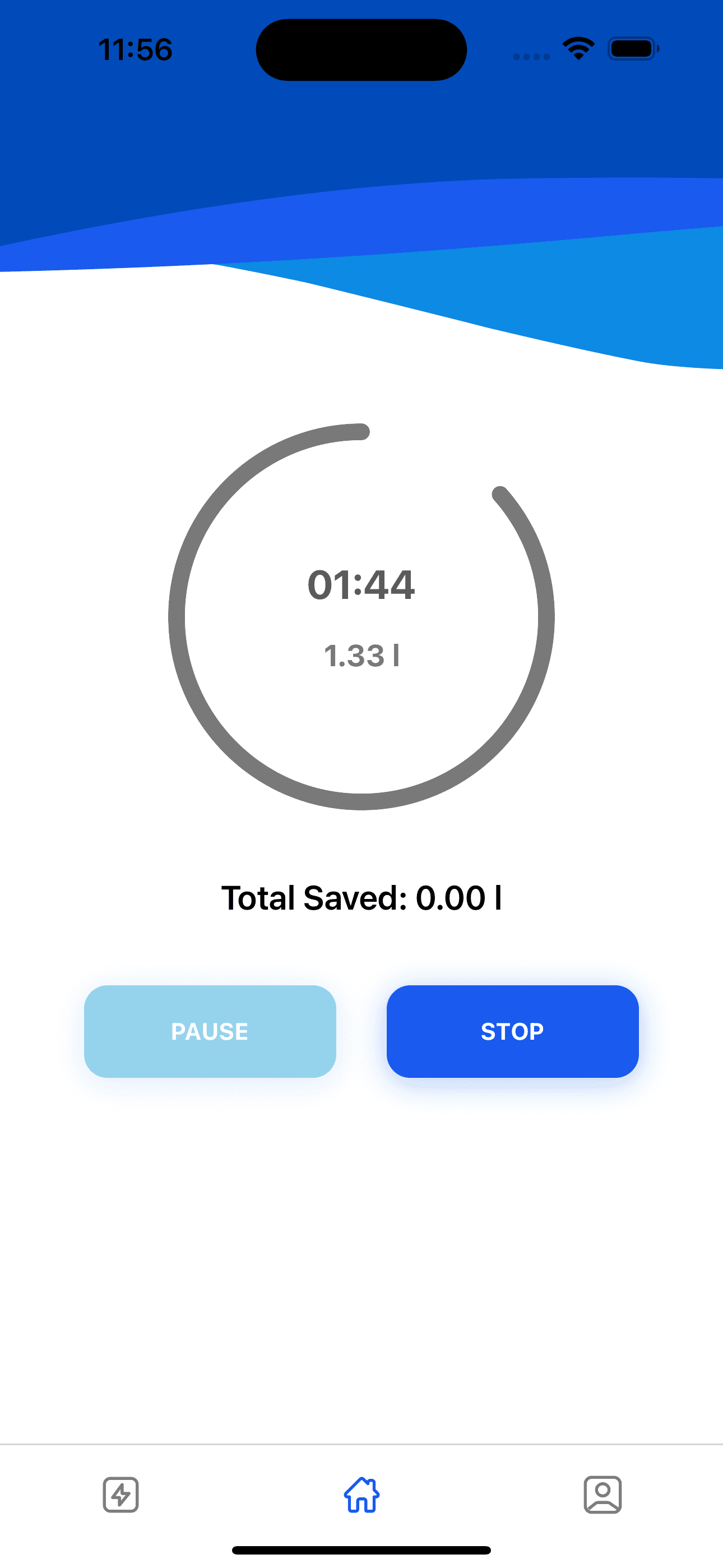
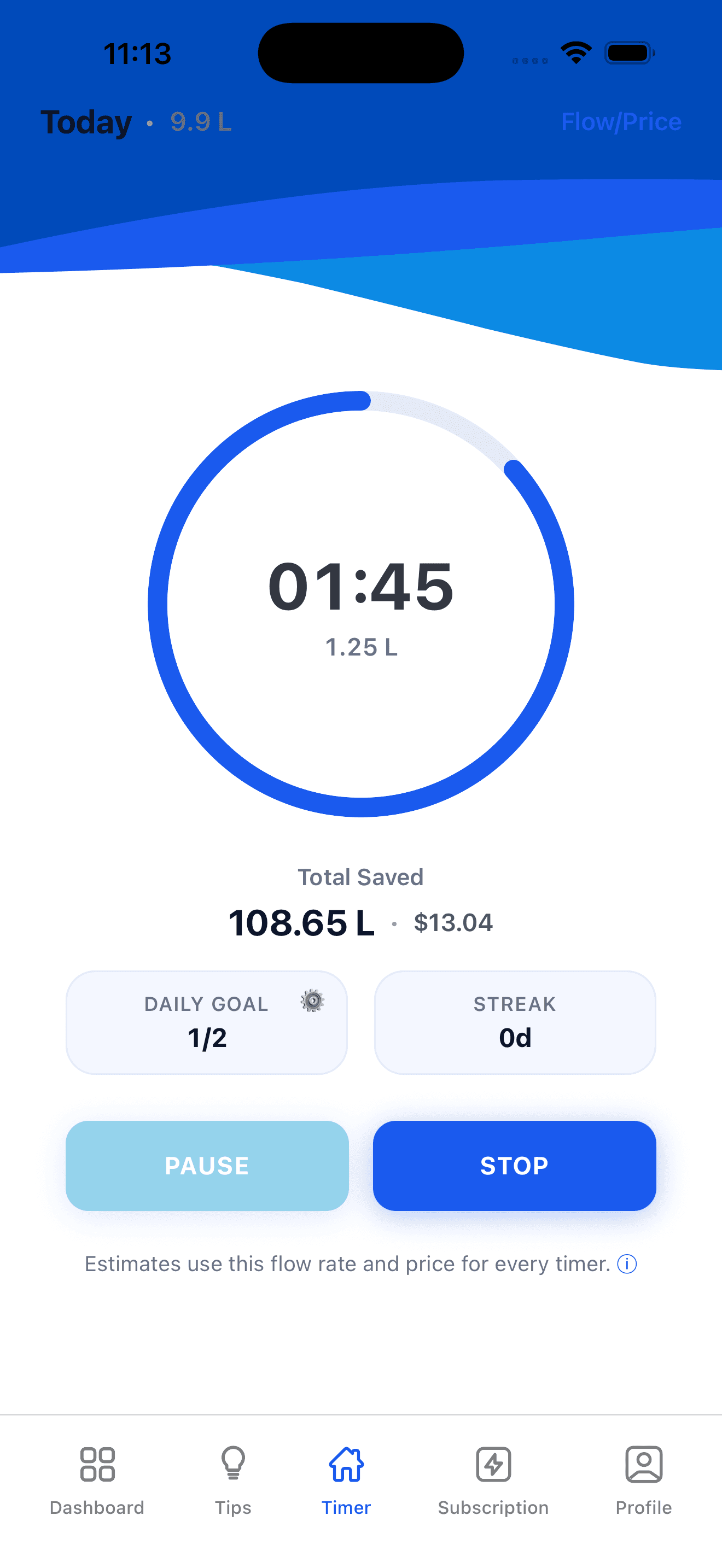
Download WaterSaver
The counter shows potential impact. The science page explains the estimate. WaterSaver helps turn that number into a daily brushing habit.
Next steps
Check the method, compare the brushing calculator, then use WaterSaver to keep progress visible.
FAQ
Practical answers for estimating water savings, understanding household impact, and tracking daily habits with WaterSaver.
For toothbrushing alone, turning off the tap can save several gallons a day. Using a common 2 gallons-per-minute faucet estimate, two two-minute brushing sessions can waste about 8 gallons, or around 30 liters, each day.
Your actual number depends on brushing time, faucet flow, and whether the tap is left running the whole time.
Small routines add up quickly. Brushing, shaving, rinsing dishes, and waiting for warm water can each waste water if the tap runs longer than needed.
A family of four that stops running the tap while brushing could avoid tens of thousands of liters of unnecessary water use each year.
On its own, brushing is a small habit. That is exactly why it matters: it is easy to repeat, easy to teach, and easy to measure.
When a daily habit saves water without making life harder, it becomes a practical starting point for bigger household changes.
Usually, yes, but the exact amount depends on local water and sewer rates. Savings are often larger when hot water is involved because you also avoid some energy use.
The counter is best used as an estimate for habit-building, not as a promise about a specific bill.
Yes. WaterSaver is designed around tracking simple actions, such as turning off the tap while brushing, so the result feels visible.
Seeing estimated liters saved over days and weeks can make a tiny routine feel concrete enough to keep doing.