Household savings
How Much Money Can You Save by Turning Off the Tap?
Turning off the tap while brushing is one of the easiest ways to reduce water waste and utility costs.
Water-saving guide
Small daily habits become measurable when you can see their impact.
In this article
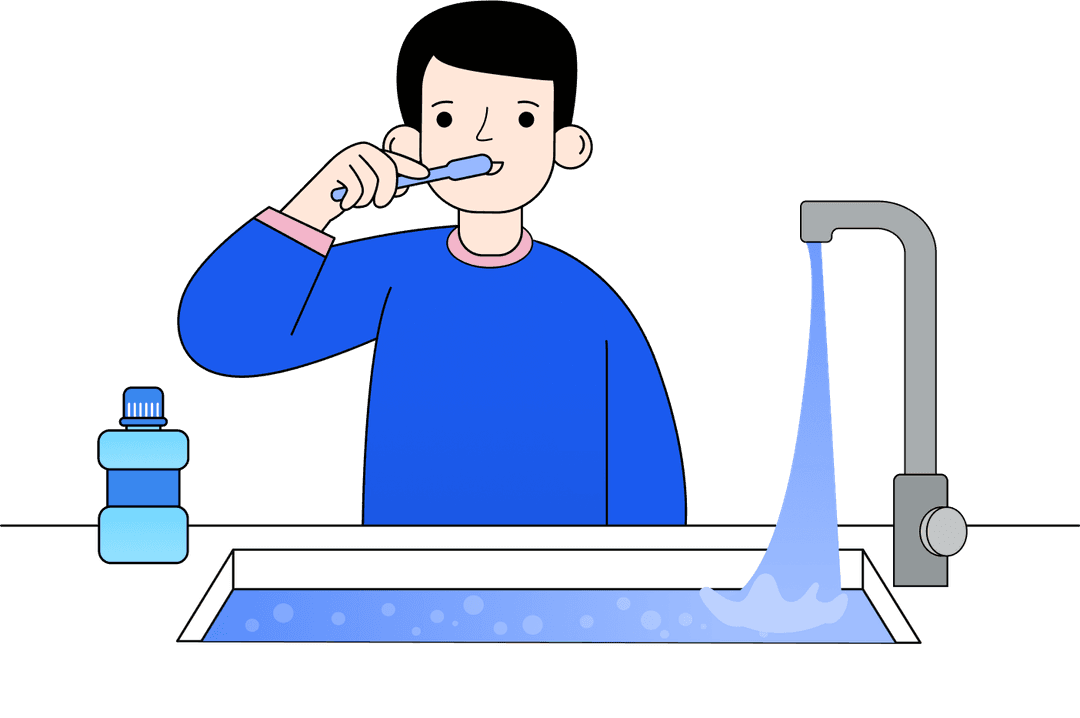
Turning off the tap while brushing your teeth is one of the easiest ways to reduce household water waste.
But many people don't realize it can also reduce utility bills.
A standard bathroom faucet typically runs at around 2 gallons (7.5 liters) per minute.
If the water stays running during brushing, a single person can waste over 10,000 liters of water per year.
WaterSaver
Track Your Water Savings
Use WaterSaver to make closing the tap part of your brushing routine and track the water you save over time.
Example Savings
Here's a simple estimate for one person:
- 2 brushing sessions per day
- 2 minutes each
- ~7.5 liters per minute
Potential savings:
- ~10,000 liters annually
- lower water usage charges
- reduced hot water energy costs
For families, the numbers scale quickly.
Water Waste Adds Up Quietly
Because tap water feels cheap and unlimited, most people never notice the long-term cost.
But small repeated habits often matter more than occasional large changes.
Turning off the tap takes:
- zero investment
- zero effort
- zero lifestyle sacrifice
Yet it creates measurable savings over time.
Track Your Savings Automatically
WaterSaver helps visualize:
- estimated liters saved
- daily conservation streaks
- long-term water impact
Seeing progress makes sustainable habits easier to maintain.
Final Thoughts
Saving water is not only about environmental awareness.
It also means:
- reducing waste
- lowering household costs
- building smarter daily habits
And sometimes the simplest actions have the biggest long-term effect.
FAQ
Questions about tap-water savings
Plain-English answers about utility bills, household savings, and what WaterSaver can estimate.
Yes, but the amount depends on local water, sewer, and energy rates. The savings from brushing alone may be small month to month, but the habit is free and repeats every day.
If hot water is involved, saving water can also reduce some energy use.
There is no single number because utility rates vary widely. A household that cuts unnecessary running tap time can reduce both water and wastewater charges, especially when several people share the same habit.
Yes, if tracking helps the habit stick. The point is not that brushing is your largest water expense; it is that it is easy to control and easy to repeat.
Small visible wins often lead to better habits in the kitchen, bathroom, and laundry room.
WaterSaver uses your saved sessions and assumptions such as faucet flow rate to estimate liters saved. Any cost estimate should be treated as a practical guide, not a replacement for your actual utility bill.
Download WaterSaver
Start Saving Water Today
Use WaterSaver to make closing the tap part of your brushing routine and track the water you save over time.
Related articles
Water-saving habits
How Much Water Do You Waste Brushing Your Teeth?
Leaving the tap running while brushing can waste thousands of liters of clean water every year.
Water waste
How Much Water Does a Running Tap Waste?
A running tap wastes far more water than most people realize, and everyday routines can add up quickly.